
Management Team
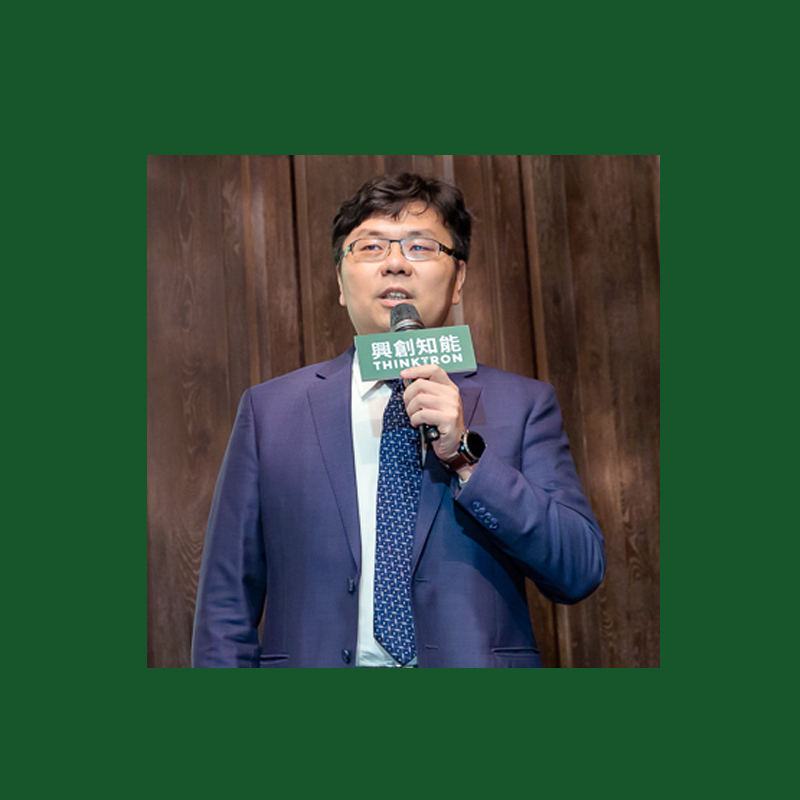
Chairperson
Dr. Thomas Chin-Tung Cheng
Executive Management
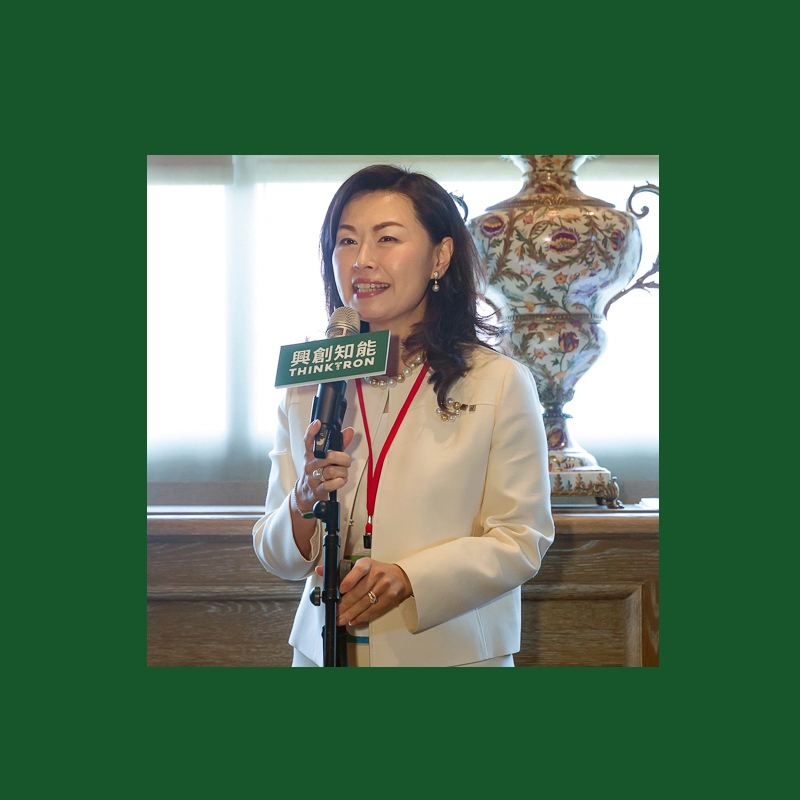
Former Chairperson
Sandra Wu, Wen-Hsiu
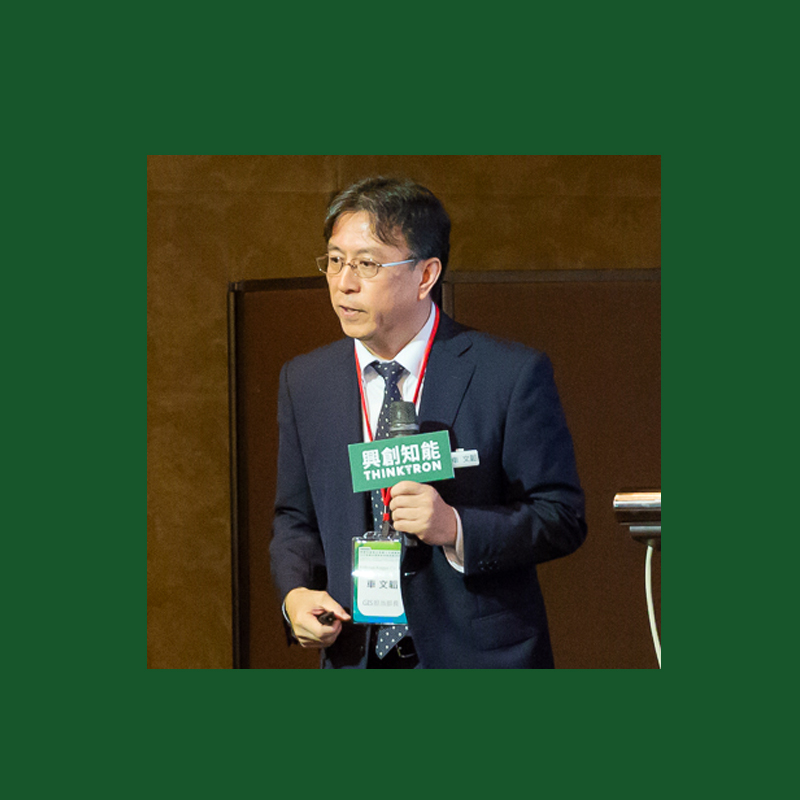
Technical Director
Dr. Wentao Che
Business Divisions
The Technology R&D Division of ThinkTron utilizes various innovative ICT (AI, IoT, 3D GIS, Big Data) technologies and aims to develop its business as a “Smart Spatial Information Service Provider” in five major fields: smart disaster prevention, smart energy, smart transportation, smart water management, and smart construction and agriculture, providing the most advanced customized solutions. Currently, there are three technology development sections that provide advanced smart city solutions for the above five fields.
Business Division IISmart City & IoT Solution
Director
Dr.Po-Chuan Chi
Business Division I
3D GIS & SaaS Solution
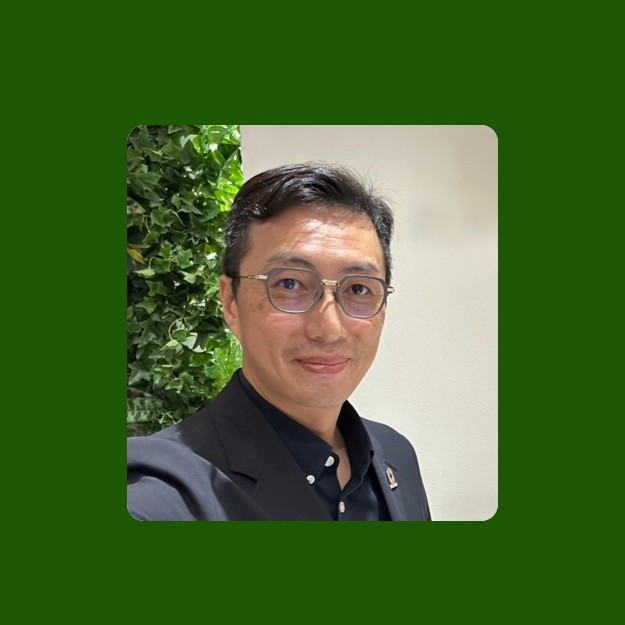
Director
Eddy Huang
事業一部一課
黃瑞賢 課長
Integrating GeoAI, applications with 3D GIS, BIM construction, and cloud computing architecture is one of the important approaches to realizing smart construction management (i-construction) and smart disaster-prevention solutions. It consolidates diverse and massive environmental monitoring–related spatial information, including multispectral remote sensing, aerial photography, UAV, LiDAR, CCTV, and IoT sensors, which can be integrated into a cloud platform, and the development of Software as a Service (SaaS) has become a trend; in addition, developing highly efficient and visualized 3D GIS application workflows can be applied to issues such as smart industrial site and 3D underground pipeline management, smart water management, all-hazard smart disaster-prevention critical infrastructure safety monitoring, AI intelligent sensors, hazard potential analysis and early warning, autonomous vehicle map platforms, and intelligent civil engineering construction management.
事業一部二課
黃梓育 代理課長
Remote Sensing & AI Solution
With the advancement of satellite remote sensing technology, the accuracy of observation, as well as the breadth and frequency of data acquisition, have significantly increased. This has led to more diversified spatial information integration applications within the 3S (GIS, RS, GPS) and MMS (Mobile Mapping System) domains. To meet the high-demand needs of environmental monitoring applications, AI solutions have been introduced to develop automated spatial data fusion, remote sensing image recognition, and time-series forecasting models. These have already been successfully applied to issues such as real-time computation of hydrological parameters, agricultural crop interpretation and forest species classification, CCTV system image recognition, borehole and geophysical survey imagery interpretation for oil reservoir structures, road infrastructure object detection, and HD map spatial data extraction.
As countries accelerate the deployment of IoT monitoring equipment for smart cities, GIS and AI technologies are used to process IoT environmental big data and support spatial and temporal prediction and decision making.Geo-AIoT (GIS + AI + IoT) has clearly become a core and essential technology for smart cities. By integrating various social notification mechanisms and communication tools, it provides government agencies and the public with early-warning information and disaster alerts, enabling immediate understanding of disaster developments.These technologies have already been successfully applied to issues such as landslide disaster monitoring and early-warning mechanisms, hillside community safety monitoring, integrated smart watershed management, urban flood prevention and early warning, stormwater/wastewater sewer quality monitoring and simulation integration, natural disaster risk management, and insurance actuarial analysis.